
08:00 AM – 09:15 AM NYC
01:00 PM – 02:15 PM London
02:00 PM – 03:15 PM Amsterdam
 Register Now
Description
Under the auspices of ACSS, this webinar will bring together sanctions practitioners and in-house specialists to discuss the rapidly evolving landscape of sanctions enforcement in Poland and across the EU. Beyond assessing the current legal and institutional framework, the session aims to strengthen and integrate the local community of sanctions professionals.
The webinar is Part 1 on a two part series. This first panel will discuss:
Panel I: Sanctions Enforcement – From Compliance to Criminal Law Priority
For many years, sanctions enforcement operated primarily at the level of financial institutions, driven by internal compliance frameworks rather than active prosecutorial engagement. This paradigm is now shifting. As sanctions regimes expand and gain geopolitical significance, enforcement has become a strategic priority-including though EU efforts to harmonize and strengthen enforcement across Member States. This shift increasingly affects Polish businesses beyond the financial sector, including exporters, manufacturers, logistics operators, and companies exposed to sanctioned jurisdictions or entities through their supply chains or commercial relationships.
Poland has taken steps to reinforce its enforcement architecture, including through draft legislation commonly referred to as the “sanctions constitution”, aimed at implementing the EU directive on sanctions and enhancing institutional coordination. Once adopted, it is expected to significantly increase the risk exposure of businesses, particularly through a criminal liability regime for collective entities.
At the same time, important challenges remain. Recent data indicates that over 800 reports of alleged sanctions violations were submitted to the prosecutor’s office in the past year, yet more than 700 proceedings were discontinued at an early stage.
This panel will address in particular:
-
What explains the high attrition rate in sanctions-related investigations and what does it tell us about where enforcement risk actually lies for businesses?
-
Are enforcement authorities sufficiently equipped-both legally and operationally-to detect and prosecute sanctions offences?
-
How is institutional capacity being developed across investigative and supervisory bodies?
-
Which categories of sanctions-related offences are being pursued in practice, and how does enforcement look from the administrative perspective?
-
What the new framework will mean in practice, including how businesses should prepare?
Speakers

Anna Olejniczak-Michalska
Attorney-At-Law,
Wardyński & Partners
Anna Olejniczak-Michalska focuses her practice on cross-border trade, particularly export controls and international economic sanctions. She advises clients on sanctions and export control compliance, implementation and enforcement matters, including risk assessments, the design and review of compliance programmes, M&A transactions, contractual negotiations and reviews, transaction due diligence, licensing, internal investigations, remediation, and related disputes.
She represents clients in matters involving contract performance, governing law, jurisdiction, and the international enforcement of judgments, as well as in proceedings before the European Court of Human Rights.
Before entering private practice, Anna gained experience at leading international and public institutions. From 2007 to 2012, she worked at the European Court of Human Rights, where she drafted decisions and judgments in cases brought against Poland. From 2015 to 2020, she worked as Chief Expert in the Ministry of Justice's Department of International Cooperation and Human Rights.
She graduated in law and international relations from Adam Mickiewicz University in Poznań and completed a postgraduate Master II programme in private law at the University of Strasbourg.

Dr. Marcin Łukowski
Founder,
ET CAETERA Sanctions & Trade Compliance
Dr. Marcin Łukowski is a Doctor of Law, sanctions compliance expert, researcher, and practitioner with over a decade of experience in trade compliance, export controls, international law and anti-money laundering. He is an Associate Fellow at the Royal United Services Institute (RUSI). Dr. Łukowski is engaged in sanctions-related projects of the European Commission and the Council of Europe. He is the Founder of ET CAETERA – Sanctions & Trade Compliance. He also serves as the EMEA Trade Compliance Manager, overseeing sanctions, export control processes and risk assessments across EMEA countries. Previously, he held senior roles at multiple companies, managing global compliance teams and advising on complex sanctions regimes. He is also a lecturer on sanctions and trade compliance, and the author of several academic publications, including a monograph awarded by the Polish Internal Security Agency. Dr. Łukowski has been recognized as a nominee for Wolters Kluwer's "Rising Stars Lawyers – Leaders of Tomorrow 2024" award.
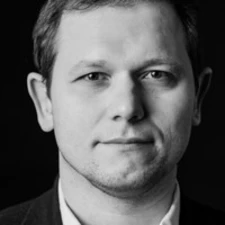
Łukasz Lasek
Adwokat, Partner, Solicitor of England & Wales
Łukasz Lasek handles international commercial disputes and criminal cases involving serious fraud, corruption, and money laundering. He is a certified mediator at the Mediation Centre at the Polish Bar Council, and a member of the Warsaw Bar Chamber, the Law Society of England and Wales, Young Arbitrators Sweden, the European Criminal Bar Association, and the Association of Certified Fraud Examiners. He is also a member of the board of trustees of the Academy of European Law (ERA) in Trier, Germany, and the Dean's Global Advisory Board at Indiana University Maurer School of Law in the US.
He has participated as counsel or secretary to the tribunal in arbitrations under the ICC Court of International Arbitration, the Court of Arbitration at the Confederation of Lewiatan, and the Court of Arbitration at the Polish Chamber of Commerce.
Łukasz earned a law degree with distinction at the University of Warsaw, where he also completed programmes in English and European law (University of Cambridge) and US law (University of Florida). His master's thesis on patent protection and access to medicines won first prize in the Helsinki Foundation for Human Rights competition.